
(852) 5923 7263Request a quote
Before a new or reworked drinking water system is put into service, every pipe, fitting and tank in it must be disinfected. Construction, storage and open pipe ends leave contamination behind that flushing alone does not remove. Gotech fills the system with chlorinated water at 50 mg/L or more, draws it through every outlet on every floor, holds it for 24 hours, flushes it back below 1.5 mg/L and sends samples from each subsystem for laboratory analysis. You get the readings and a dated report for the commissioning file. It is a different job from fresh water tank cleaning, which is routine maintenance of the tank itself.
In an occupied building the work is planned section by section and floor by floor, so the water suspension is as short as it can be.
Contamination gets into new pipework during construction and storage, and most of all where pipe ends were left open. Sediment inside a pipe shelters micro-organisms, so a disinfectant cannot do its job on a dirty pipe. The order matters: keep pipes clean and plugged before installation, pressure-test and flush out the dirt and weld debris, and only then chlorinate. Flushing removes what is loose; chlorination deals with what flushing leaves behind.
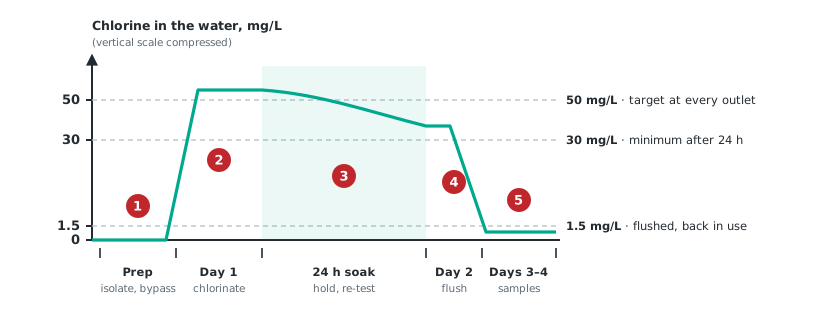
Before we start, the contractor has pressure-tested the pipework, flushed each section through hydrants or wash-outs to remove dirt and weld debris, cleaned the tanks and refilled the system with potable water with every valve open.
The chlorinated water stays in the mains and subsystem pipes for about 24 hours. The sampling points are then tested again: the chlorine must still exceed 30 mg/L.
The chlorinated water is flushed and discharged until the chlorine in the water main is below 1.5 mg/L. Flushing continues on days 3 and 4 if a section needs it.
Water samples are collected from every subsystem and analysed by a HOKLAS-accredited laboratory. The readings from each stage and the laboratory results go into a dated report for your commissioning or handover file.
| When | What happens | Water |
|---|---|---|
| Before | Notice to all parties, appliances bypassed, temporary connections fitted | On, then isolated |
| Day 1 | Chlorination to 50 mg/L or more at every outlet, floor by floor | Off for the section |
| 24 hours | Soak; re-test for 30 mg/L or more | Off |
| Day 2 | Flush and discharge until below 1.5 mg/L | Off, then restored |
| Days 3–4 | Further flushing if needed; samples collected from every subsystem | On, except any section still being flushed |
| After | Laboratory analysis and the dated report | On |
Nobody may use water from the outlets being disinfected until the flush reading is below 1.5 mg/L. We label the outlets and tell you when the section is back in service.
For the section being treated: day 1 for chlorination, the 24-hour soak, and day 2 for flushing, with further flushing on days 3 and 4 only if a reading is still high. Occupied buildings are done section by section so the rest of the building keeps its supply.
The system is dosed to 50 to 100 mg/L and every outlet must read more than 50 mg/L when it is drawn. After the 24-hour soak the reading must still exceed 30 mg/L. It is then flushed until the water main is below 1.5 mg/L.
No. UV sterilisers, boilers, water heaters and any equipment that must not contact the disinfectant are disconnected or bypassed first, and anything still connected is switched off or set to bypass.
No. Fresh water tank cleaning is routine maintenance of the tank: drain, clean, disinfect the tank and refill. Potable water disinfection chlorinates the whole pipework system to a measured concentration before it goes into service. Tanks are cleaned before the chlorination starts.
Yes. Samples are collected from every subsystem after the flush and analysed by a HOKLAS-accredited laboratory, and the results go into the report with the chlorine readings from each stage.
We reply within one working day.
Tell us the building, the pipework and the date it needs to be in service. We will plan the shutdown and quote.